
 Facebook
 X
X
 Pinterest
 Copy Link
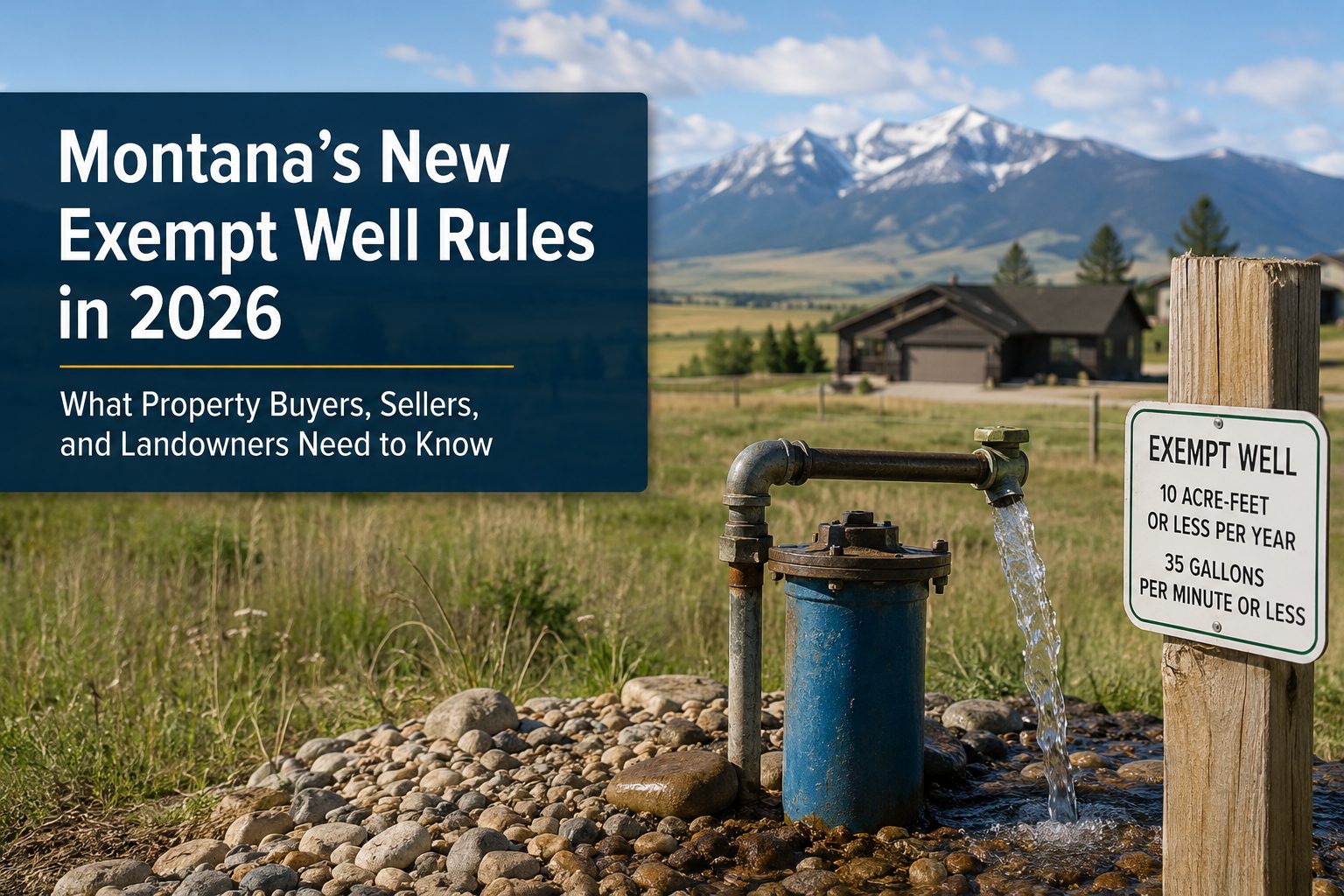
Montana’s New Exempt Well Rules in 2026: What Property Buyers, Sellers, and Landowners Need to Know
If you’re planning to buy land, build a home, develop property, or sell acreage in Montana, there’s a major water rights update you need to understand before moving forward.
Beginning January 1, 2026, Montana is implementing a new process for exempt wells that could directly affect timelines, financing, subdivision approvals, and even real estate transactions. The change comes from House Bill 681 and introduces a required “Notice of Intent” process before landowners can legally develop groundwater under an exempt well.
For buyers and sellers in Gallatin Valley and across Montana, this is more than a regulatory update — it’s something that can impact whether a property is buildable, financeable, or ready for development.
What Is an Exempt Well in Montana?
An exempt well is a groundwater well that qualifies for an exception to Montana’s standard water right permitting process.
To qualify as exempt, the well must:
- Use 10 acre-feet of water or less per year
- Divert 35 gallons per minute or less
Historically, exempt wells have been commonly used for:
- Single-family homes
- Small agricultural uses
- Rural residential properties
- Small developments
Because exempt wells avoided the full permitting process, they became one of the primary ways rural Montana properties secured water access.
What Changes in 2026?
Starting January 1, 2026, anyone intending to develop water through an exempt well must first submit a Notice of Intent (NOI) to the Montana Department of Natural Resources and Conservation (DNRC) before using water.
This is a major procedural shift.
Previously, landowners often drilled and developed first, then finalized paperwork afterward. Under the new rules, DNRC now reviews eligibility before the project proceeds.
Why Did Montana Change the Process?
According to DNRC, the change was created through the passage of House Bill 681 during the 2025 Montana Legislature.
The goal is to:
- Clarify whether a proposed exempt well actually qualifies
- Prevent unauthorized groundwater development
- Reduce conflicts involving combined appropriations
- Improve transparency during subdivision and real estate reviews
In practical terms, Montana wants to determine whether a property legally qualifies for an exempt well before substantial money is invested into infrastructure, drilling, or development.
How the New Notice of Intent Process Works
Here’s what the process looks like beginning in 2026:
Step 1: Submit Form 602I
Landowners must complete a “Notice of Intent to Appropriate Groundwater” form with DNRC.
The application includes:
- Proposed point of diversion
- Place of use
- Intended water use
- Development details
Step 2: Pay the Filing Fee
The filing fee is $400.
Step 3: DNRC Review
DNRC states it will review complete applications within 10 business days.
Step 4: Approval or Denial
If approved:
- The applicant has 5 years to complete development and put water to beneficial use
If denied:
- The applicant must pursue the standard water right permitting process instead
What Happens If the NOI Is Denied?
One of the biggest reasons for denial involves what Montana calls a combined appropriation.
This occurs when multiple wells or groundwater uses are treated collectively under water law. If the combined use exceeds the 10 acre-foot annual limit, the exempt well may no longer qualify.
That means:
- Some parcels previously assumed to be buildable may face additional permitting hurdles
- Developers may need a full water right permit
- Buyers should investigate water rights earlier in the due diligence process
For real estate transactions involving vacant land, this could become one of the most important items buyers verify before closing.
Why This Matters for Montana Real Estate
At Ridge Realty Windermere, we expect this change to affect:
- Rural land purchases
- New construction planning
- Small subdivisions
- Builder development timelines
- Financing and lender reviews
- Property valuations in some areas
Water rights have always mattered in Montana — but beginning in 2026, exempt well verification may become a much larger part of the buying and selling process.
Buyers Should:
- Verify exempt well eligibility early
- Review neighboring water uses
- Understand subdivision water history
- Ask about combined appropriations
- Work with knowledgeable local professionals
Sellers Should:
- Prepare documentation ahead of listing
- Understand current well status
- Anticipate buyer due diligence questions
- Be proactive with disclosures
Can Existing Water Users Ignore the New Rule?
No.
Even landowners already using groundwater under an exempt well must still file a Notice of Intent if one was never authorized previously. DNRC states it cannot process a Notice of Completion without an authorized NOI.
How to Check Water Right Records
Montana property owners can search water right records through the DNRC Water Rights Query System.
Records may show statuses such as:
- NOI Pending
- NOI Authorized
- Denied
- Expired
- Terminated
This will likely become a standard step during rural property due diligence moving forward.
Final Thoughts
Montana’s 2026 exempt well changes represent one of the biggest procedural updates to rural water development in years.
For some properties, the process may remain straightforward. For others, especially in rapidly growing areas like Gallatin Valley, understanding water rights early could save significant time, money, and frustration.
If you’re considering buying land, selling acreage, or developing property in Southwest Montana, working with professionals who understand both real estate and local water issues will matter more than ever.
At Ridge Realty Windermere, we stay ahead of changes that impact Montana property owners so our clients can make informed decisions with confidence.
Need Help Navigating Rural Property or Land Purchases in Montana?
Eric Linville Ridge Realty Windermere specializes in helping buyers and sellers navigate Montana land, rural homes, and real estate opportunities throughout Gallatin Valley and surrounding areas.
📍 Visit: Ridge Realty Windermere
📍 Facebook: Eric Linville Ridge Realty Facebook
📍 YouTube: Ridge Realty Windermere YouTube Channel
📧 Email: linville406realty@gmail.com
Source handout from Montana DNRC regarding House Bill 681 and exempt well changes.
